
How Trani stone differs from Apricena stone
Two Apulian limestones from different basins and geological formations: where they are quarried, what varieties they yield and what the data sheets say.
In short
- Trani stone is quarried in the northern Murge, and Apricena stone in the western Gargano.
- Both are limestones, the first from the Calcare di Bari and the second from the Calcari di San Giovanni Rotondo.
- Serpeggiante and filetto rosso are Apricena varieties, while biancone and bronzetto are names used in both basins.
- The technical data sheets do not measure the two stones with the same method, and outdoors it is mostly the finish that counts.
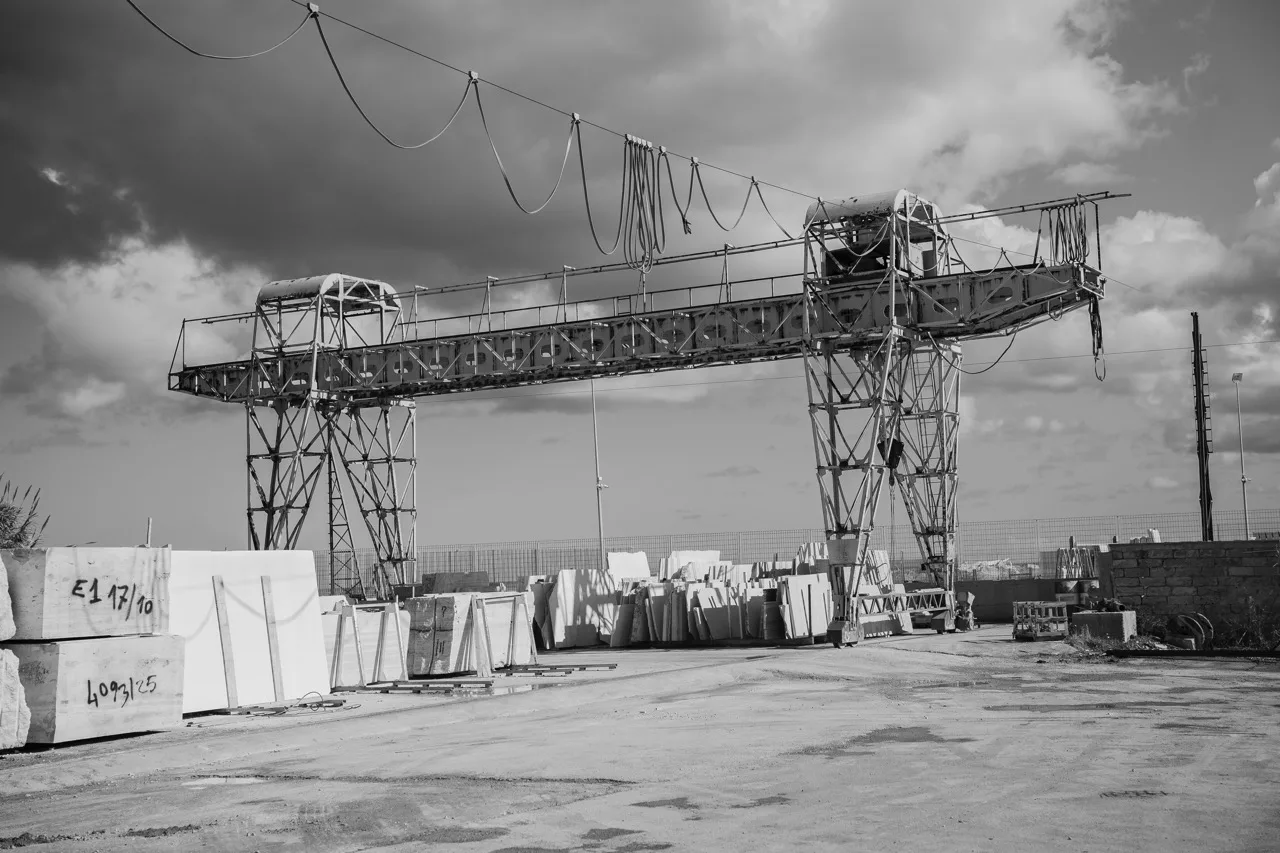
They are two different limestones, quarried in separate basins and formed in two distinct geological formations. Trani stone comes from Trani and the northern Murge. Apricena stone is quarried in the westernmost part of the Gargano, in the province of Foggia.
Public sources show no consistent price difference between the two stones. The price depends on selection, finish, thickness and size.
Where they are quarried
The Trani stone basin covers the town and a good part of the northern Murge, towards Andria, Barletta, Bisceglie, Corato, Minervino Murge and Ruvo di Puglia. A 2006 study by the Università di Bari also includes the Fasano area, further south, as a secondary zone. Pietra viva, the most widely used variety, came mainly from five districts: Sant'Elena, Sant'Angelo, Puro, Petrarello and Montericco. They all lie within 5 kilometres of the town.
Apricena stone is quarried between Apricena, Poggio Imperiale and Lesina, in open pit quarries dug below ground level. The same study noted that the basin had recently spread to San Giovanni Rotondo as well. According to the Region, 90% of the stone quarried in Puglia comes from the Apricena basin, a figure published without a reference year.
Trani stone already appears in notarial documents of the 1500s, cited for sacred works. The qualities of Apricena stone were known in 1867, when a geological description of the Gargano marbles made the case for quarrying it. As ornamental stones sold in Italy and abroad, however, the stones of Puglia made their name in the twentieth century. Trani and Apricena rose among the leading Italian basins by output only after the Second World War.
Two geological formations
Both are sedimentary rocks, limestones laid down on the floor of shallow seas. In the geological sense neither of them is a marble, and calling them marble is a commercial habit.
The limestones quarried around Trani belong to the Calcare di Bari. It is a clearly layered sequence of micritic limestones rich in microfossils, with dolomitic interbeds. It was laid down in the Cretaceous on the shallow, wide sea floors of the Apulian carbonate platform, and it is about 2000 metres thick in all. The Carta geologica d'Italia takes the sequence between Trani and Andria as the type section of one of its members, the calcari di Montericco.
At Apricena the dimension stone comes from another formation, the Calcari di San Giovanni Rotondo. The 2006 study places them in the Lower Cretaceous. Above them, across an angular unconformity, lie younger calcarenites of the Cenozoic era. Wikipedia instead speaks of the Calcari di San Nicandro, between the Upper Jurassic and the Lower Cretaceous.
In Trani bronzetto calcite makes up more than 99%, according to the European Eurolithos data sheet. Apricena stone is over 96% calcium carbonate, with traces of iron, manganese and aluminium oxides. It lies in beds from 30 to 500 centimetres thick, sloping to the south and separated by thin layers of clay. The yellow and reddish veins come from small masses of bauxite enclosed in the limestone.
The varieties of each basin
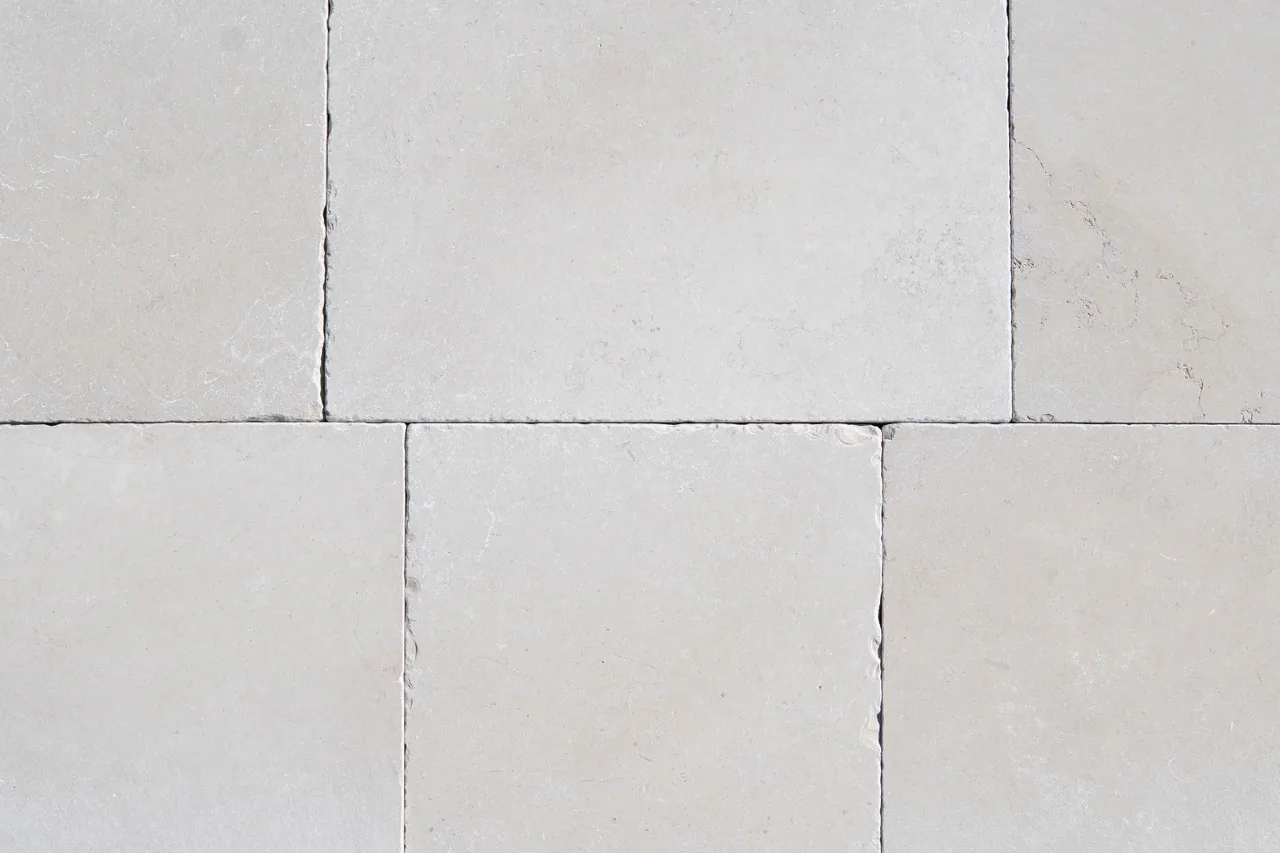
Lists of Trani stone often include serpeggiante and filetto rosso. Geological sources and Apricena producers, however, give them as varieties of the Apricena basin, as they do fiorito and silvabella. The names bronzetto and biancone, on the other hand, are used in both basins. Apricena stone, for that matter, has also been sold under the name of Trani.
- The name biancone is the same in both basins. In Trani it is the palest and most compact layer in the quarry, while at Apricena it gives its name to a sequence of layers.
- The name bronzetto is used both in Trani and at Apricena. For Trani the European Eurolithos data sheet gives its colour as beige, and Apricena producers describe it as a granular beige limestone with paler clasts.
- The serpeggiante belongs to Apricena and gives its name to another sequence of layers. Producers describe it as a limestone with a fine grain, between beige and light brown.
- The fiorito, also from Apricena, gives its name to the third sequence of layers in the basin.
- The filetto rosso of Apricena is a limestone with a fine grain on a beige ground, crossed by red stylolites.
- The silvabella of Apricena, in its classic version, is a limestone with a fine grain in beige and light brown, with reddish stylolites.
- The perlato svevo, by contrast, comes from Ruvo di Puglia, in the Trani basin, and is a limestone with a fine grain and wavy lamination.
Strength and absorption in the technical data sheets
For Trani stone the data sheets in circulation give a compressive breaking load from 1775 to 1922 kg/cm². One data sheet reports 1650 and 1670 kg/cm² on specimens put through 20 cycles of freezing and thawing. Another gives 1890 kg/cm² after the frost resistance test. Water absorption ranges from 0.11 to 0.300%.
The European Eurolithos data sheet is prepared by the Servizio geologico d'Italia. For Trani bronzetto it gives 175 MPa in compression under the EN 1926 standard, about 1785 kg/cm². Water absorption at atmospheric pressure is 0.54% by weight.
For Apricena stone there is less public data. An article in the magazine Marmi Graniti Pietre, republished online in 2014, reports an average of 1640 kg/cm² in compression. The same text gives an apparent specific weight of 2.65 g/cm³. Wikipedia gives water absorption values from 0.30 to 0.75%.
Set side by side, the Trani figures come out higher. None of the tests we found, however, measures the two basins with the same method, and the samples come from different varieties. One data sheet warns that its figures come from the quarrymen and are only indicative. If anything, the 2006 study places bronzetto «of Trani and Apricena» among the stones that sometimes resist bending better than granite.
Notable works
According to the Eurolithos data sheet, Trani stone is found everywhere in the historic centres of central Puglia. It ranges from the Murge plateau to the first slopes of the Valle d'Itria. Regione Puglia points to Castel del Monte as the emblem of its solidity and its beauty.
Among the works in Apricena stone is the church of San Pio da Pietrelcina in San Giovanni Rotondo, opened on 1 July 2004. In Renzo Piano's design the stone holds up the structure. The arches that carry the load are made of cut blocks of Apricena bronzetto, prestressed with steel cables.
Outdoors
The 2006 study finds that the ornamental stones of Puglia have, on average, a higher compressive strength than travertine and Apuan marble. They cope well with swings in temperature, partly because almost all of them absorb little water. Their weak point is black crusts, which pollution encourages on exposed surfaces in towns.
In the sources we have read, neither of the two stones performs better outdoors. On a terrace or a poolside, then, what counts is the surface. On Trani stone, bush-hammering goes where cars pass or water is constant, and sandblasting where people walk barefoot.
Cleaning is the same too, because both are limestones. Vinegar, descalers and acidic cleaners dull the surface, while for everyday cleaning water and a neutral detergent are enough.
We quarry Trani stone from our own quarry in Trani and have been working it in our own sawmill since 1994. Buying from the producer means the batch stays the same from the start of the job to the end, and special pieces such as thresholds, steps and window sills come out of the same blocks as the floor.
Frequently asked questions
Can you tell them apart by eye?
Not with certainty, because the pale tones look alike and some variety names are shared by the two basins. To establish provenance you need the documents and a petrographic examination, which you will find explained in the article on authentic Trani stone.
What stone is Trani Cathedral built from?
From Trani stone out of the town's own quarries, of a very pale pink, almost white. Building began in 1099.
Are Trani biancone and Apricena biancone the same stone?
They have the same name and two different origins, by basin and by geological formation. In 2001 a study of the Trani basin traced how the quality of biancone changes from one area to another. At Apricena the producers' consortium describes it as a limestone with a fine grain, Havana and beige in colour, with stylolites.
Is Apricena stone also used outdoors?
Yes, even on large surfaces. The forecourt of the church of San Pio in San Giovanni Rotondo, 8000 square metres in size, is paved in bush-hammered Apricena stone. The Apricena producers' consortium lists point tooling, grooving, antiquing and bush-hammering among its finishes.
Keep reading
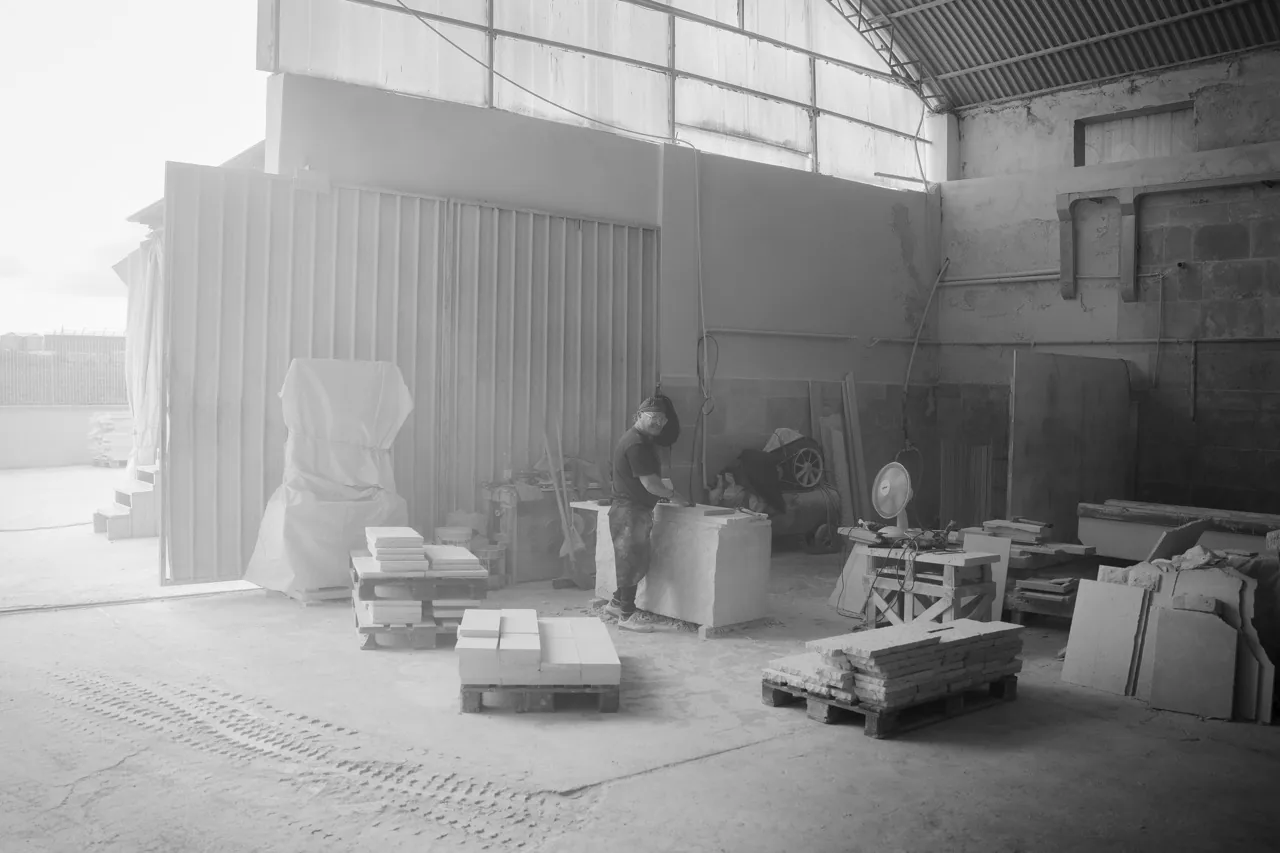
Apricena stone or authentic Trani stone: why so little is left and how to check the quarry
Legambiente counts more than two hundred disused quarries in Trani, and an authorised quarry is not necessarily in production. The name is not protected: ask in writing for the location of the quarry.
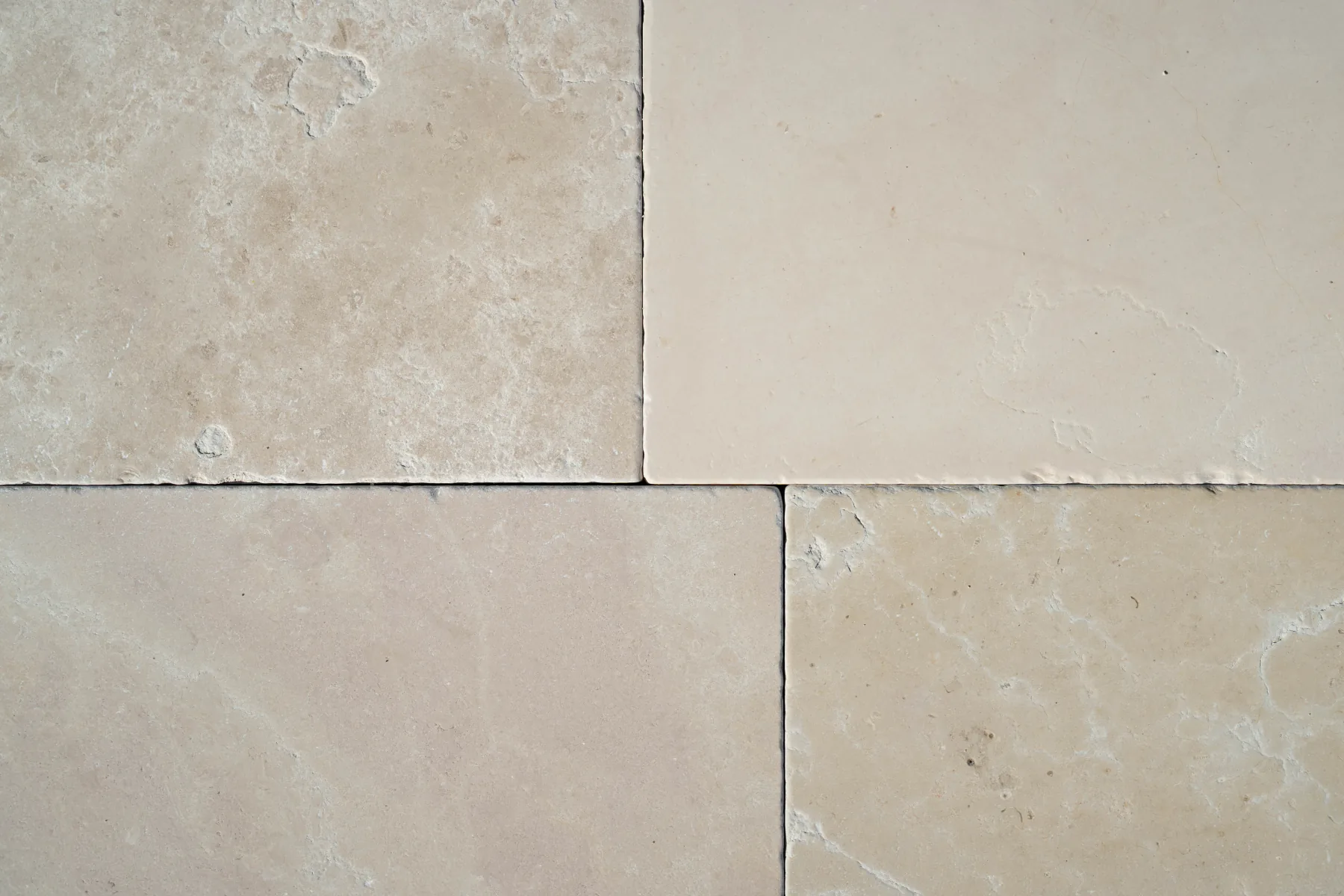
What colour Trani stone is, from biancone to beige
The ground is pale because the stone is almost entirely calcium carbonate, with just 0.2% iron oxide. Biancone is the palest selection, and the finish shifts the tone.
From theory to your site
If you are choosing stone for a project, we'll help you work out which finish really holds up.