Skip to content
DF Marmi Trani
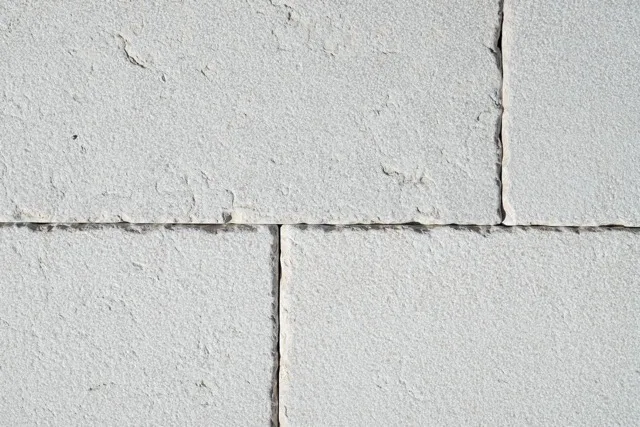
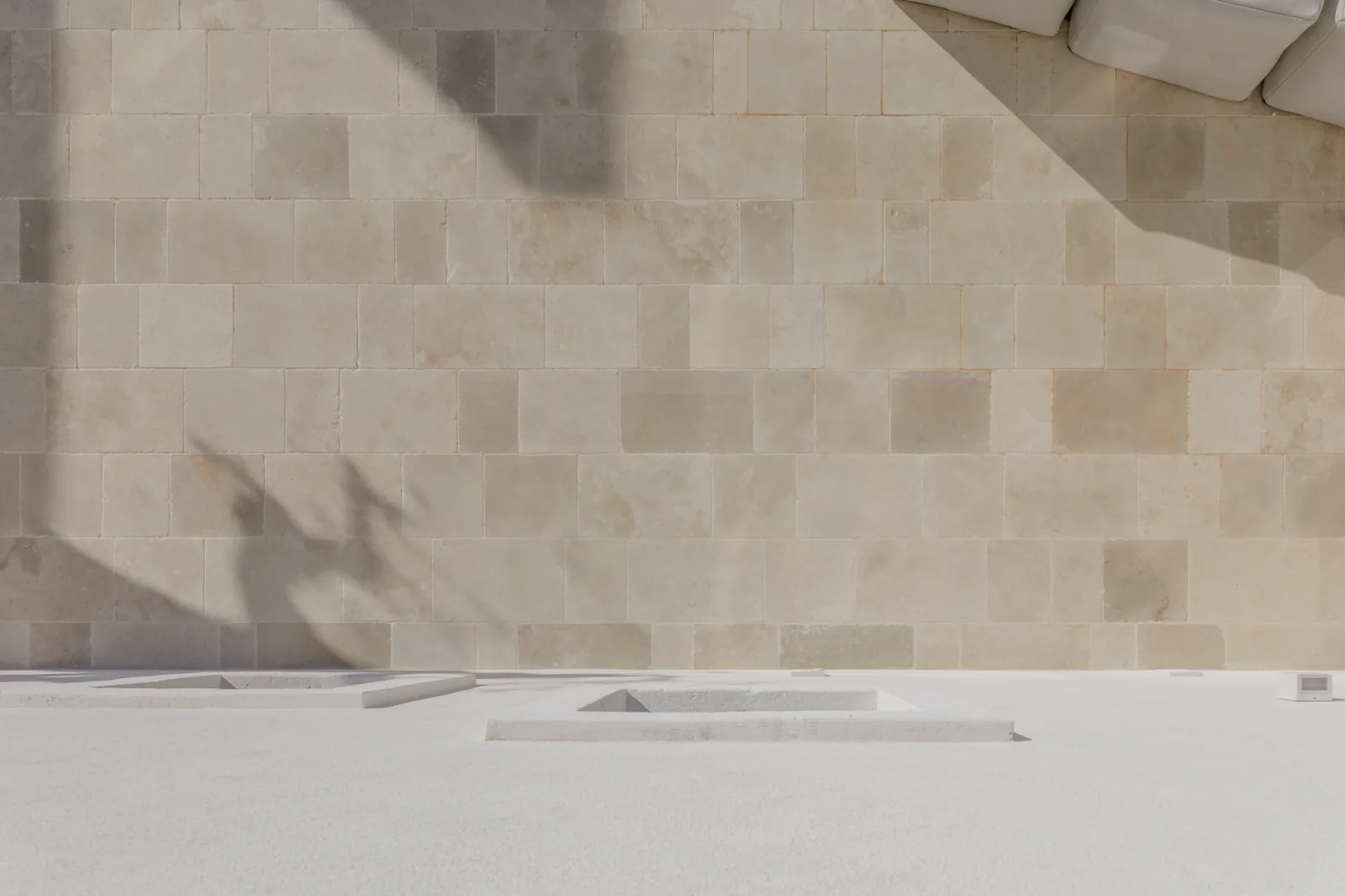
Cladding in dressed Trani stone blocks on an external wall

Façades, walls, bathrooms

Trani stone cladding

On a wall Trani stone weighs, has to be fixed and is seen from close up, and none of the three matters on a floor. Here you will find how the thickness is chosen, which finishes work on a wall, and when a dressed block beats a slab.

What changes compared with a floor

On the floor the slab rests and its weight works in your favour. On a wall that same weight has to be held by the adhesive, the substrate or a fixing, and that limits the thickness you can use.

In exchange, a wall is never walked on. The constraints of grip and impact resistance fall away, and finishes open up that we would never use on a floor: honed, polished, relief surfaces.

Then there is distance. A floor is seen from a metre eighty, cladding from half a metre: veining, edges and joints are all visible, and the choice of batch matters more than anywhere else.
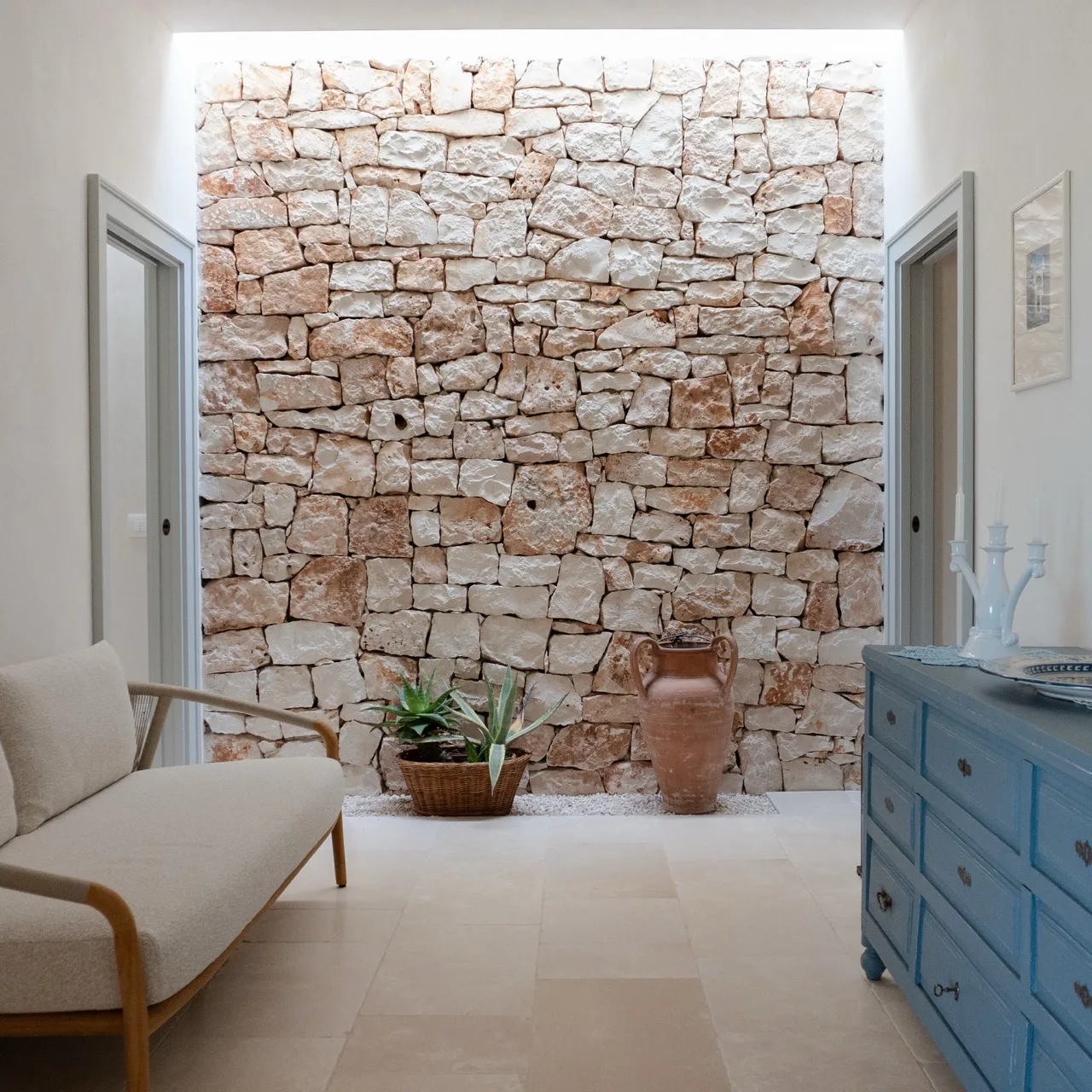
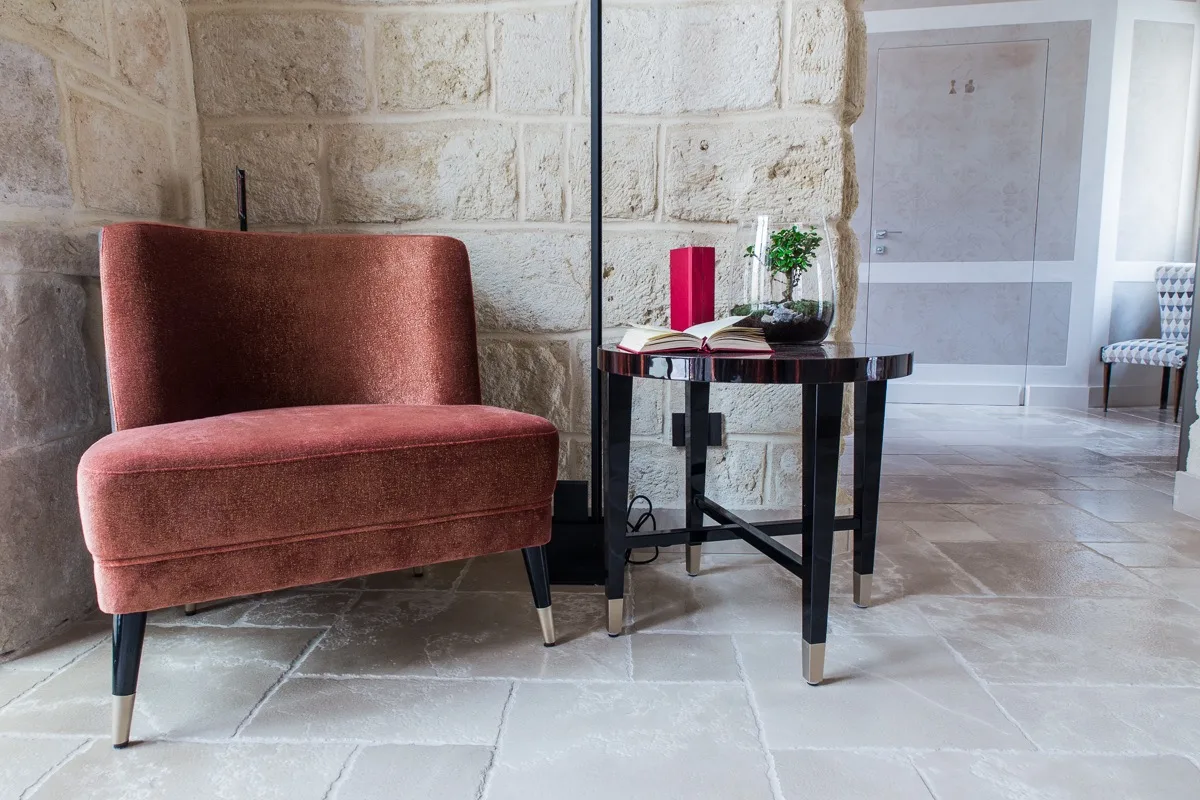
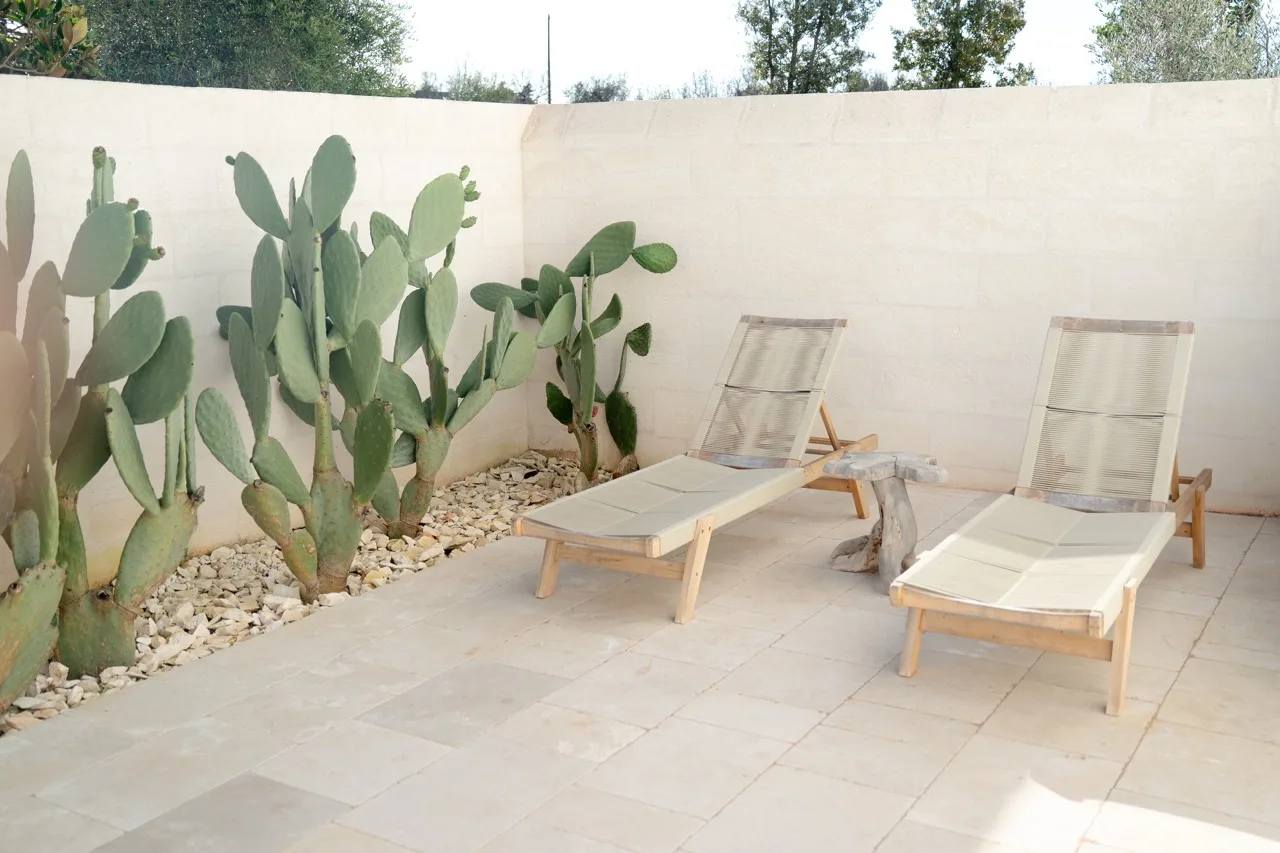
Interior wall clad in Trani stone beside a pale floor

Slab or dressed block

The thin slab, meaning the 1.2 cm catalogue thickness, is bonded to the substrate and gives a continuous, flat surface. It is the choice for interior walls, bathrooms, showers and lift cars, where the design has to stay clean and you do not want to steal centimetres from the room.

The dressed block is thicker and is laid in courses, like masonry. It casts its own shadow, gives depth and the raking light play that a bonded slab cannot. We use it for façades, portals, plinths, feature walls and for restorations where new cladding has to sit beside real masonry.

In short: if the wall should disappear behind the furniture, use slabs; if the wall is the design, use dressed blocks.

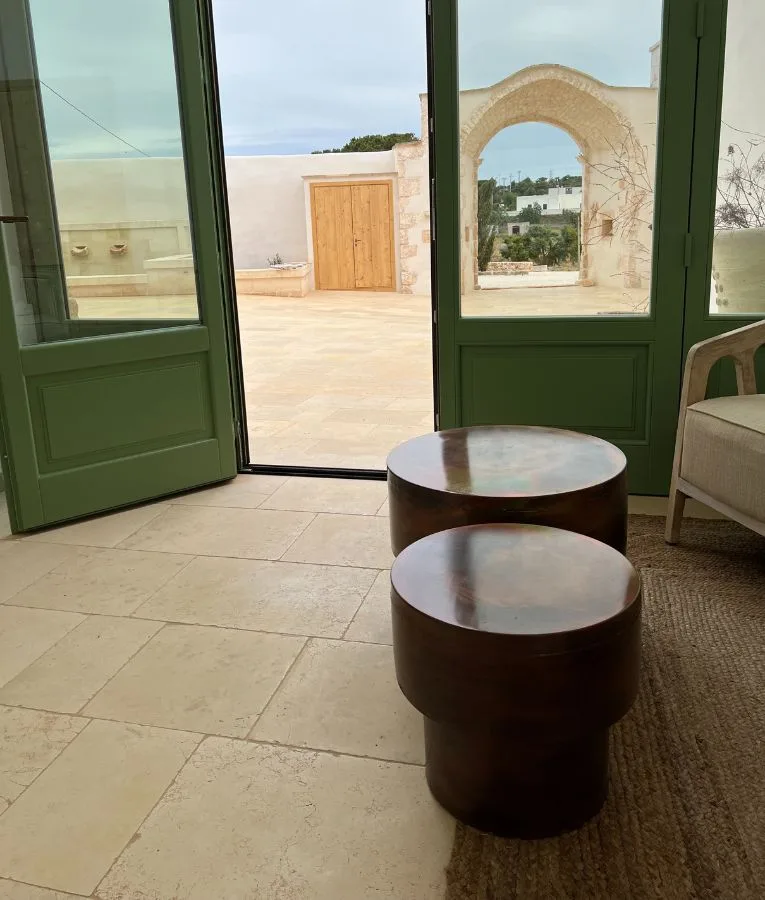
Interior wall in Trani stone blocks with an antique beige floor

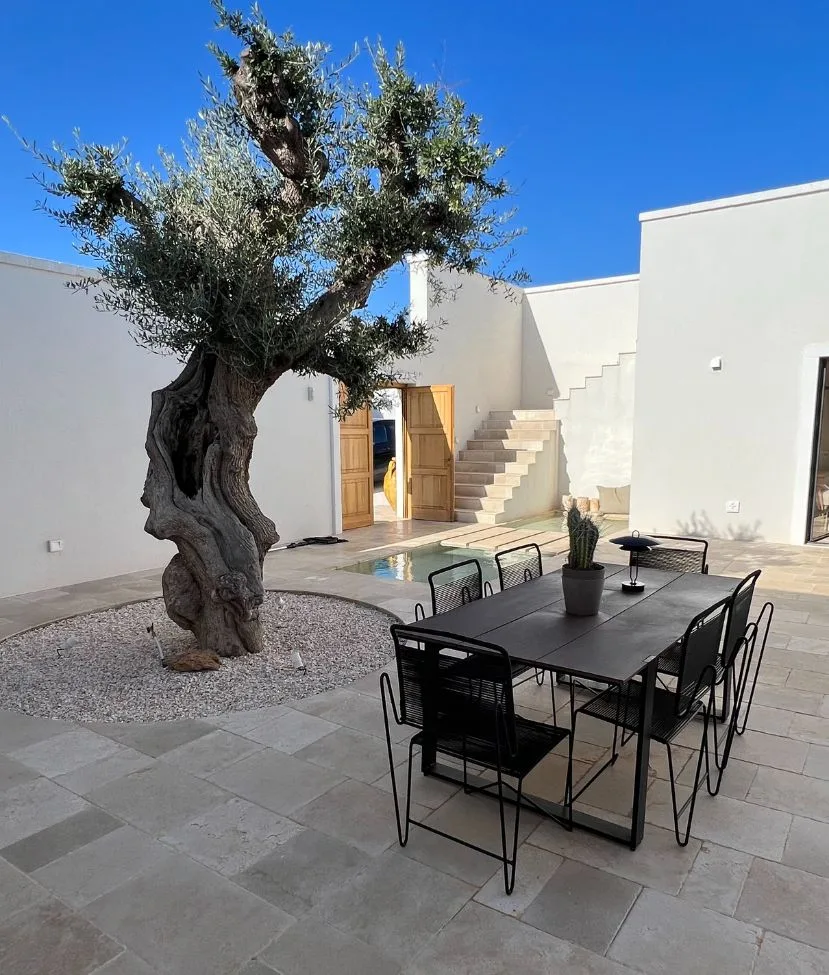
Exterior cladding and façades

Outdoors there are two problems, running water and frost. The design deals with the first, through drips, overhangs and sealing; the material deals with the second, with water absorption of 0.300% and a loss of strength below 2% after freeze-thaw cycles.

Above a certain size and height a bonded slab is no longer enough: you move to mechanical fixing or a ventilated façade, and the thickness grows accordingly. This is a decision to take with the designer before ordering the material, because it changes the cut.

The finishes that hold up best outdoors are the same ones that hold up on exposed floors: bush-hammered, sandblasted, antiqued. Polished ones lose their mirror within a few years under rain and direct sun.

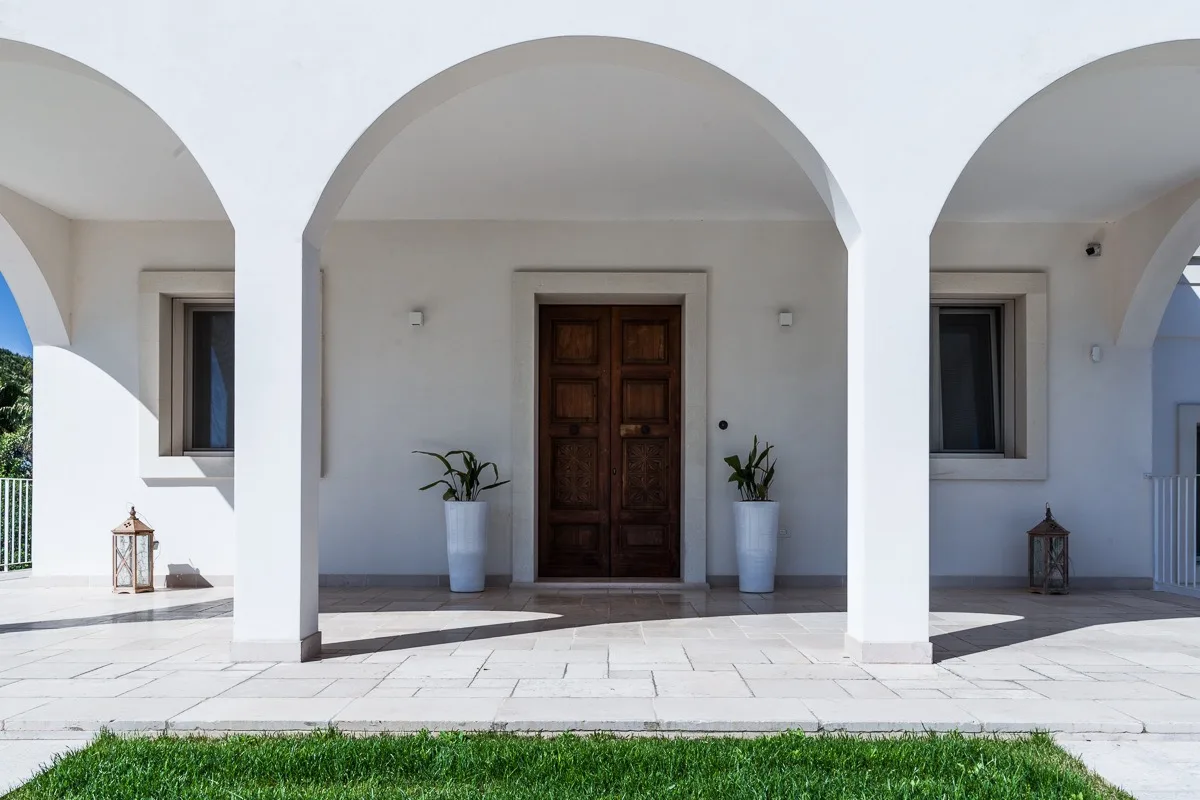
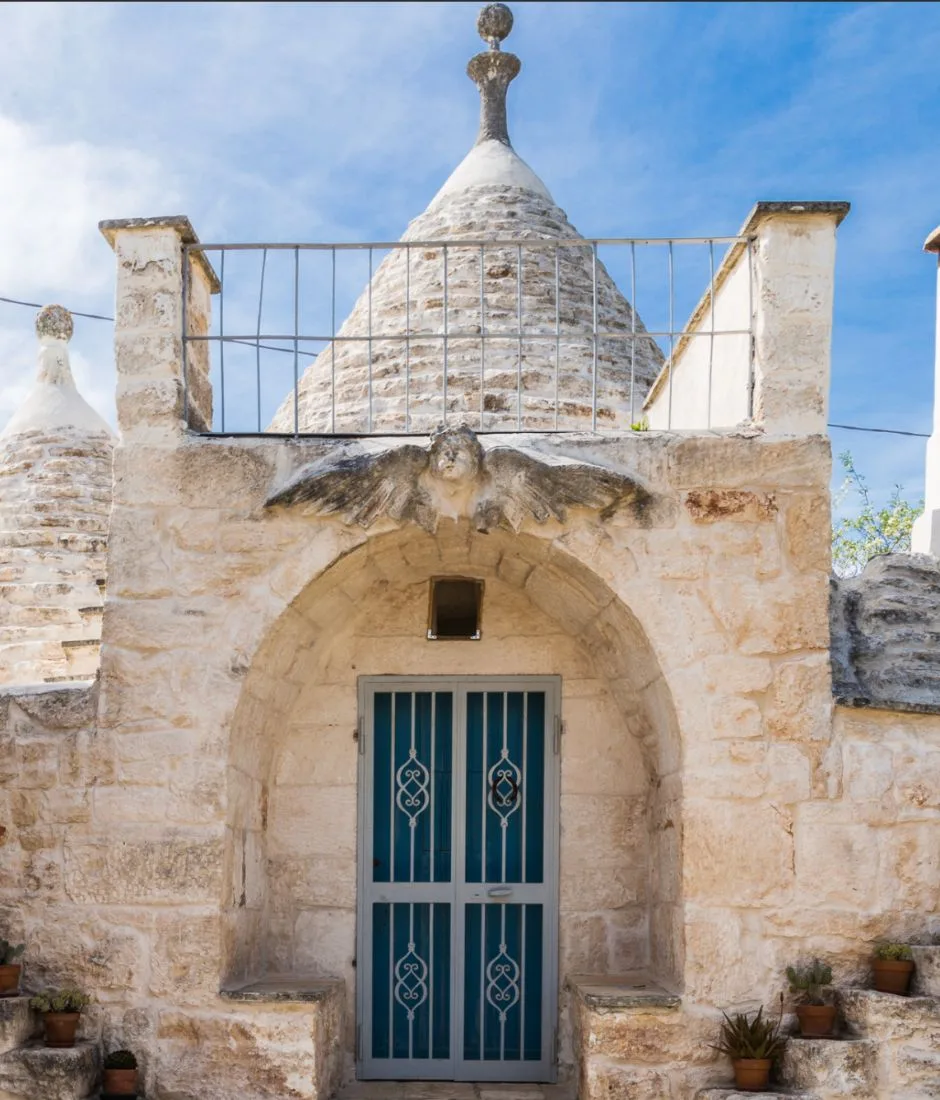
Arched portico in Trani stone with classic beige paving

Bathrooms, showers and fireplaces

In a bathroom Trani stone works everywhere except where hard water is left standing, because limestone is attacked by acids. A water- and oil-repellent, plus the rule of never using descalers, solves the problem for good.

In a shower you use large slabs and few joints: fewer seams, fewer places for water to work at. The tray needs a finish with grip, sandblasted or lightly bush-hammered, while the walls can be honed.

Around a fireplace stone also works well thermally: high density and low expansion, 0.0048 mm/m·°C, mean it stores heat and gives it back without cracking through the cycles of lighting and cooling.

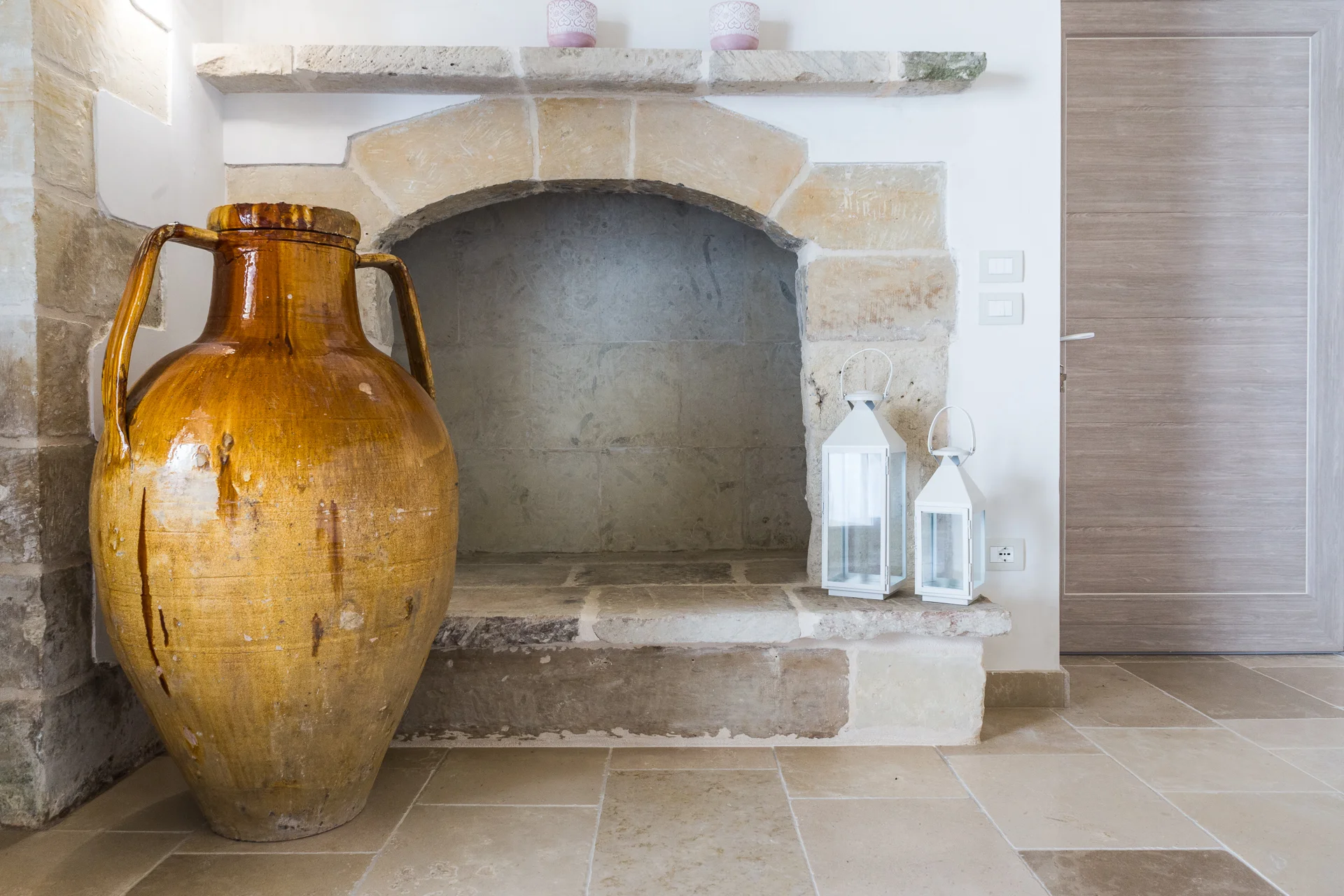
Interior niche clad in Trani stone with an amphora

The finishes that work on a wall

FinishEffect on a wallWhere
BrushedSilky surface, legible veining, restrained reflections.Interior walls of living rooms and bedrooms, vaulted corridors.
Antiqued (tumbled)Rounded arrises and a soft surface: it looks decades old.Masserie, restorations, feature walls, spa areas.
Bush-hammeredGranular: it holds shadow and draws the course.Plinths, façades, portals, external walls.
Honed / polishedReflects the light and widens the space.High-end bathrooms, formal walls. Indoors only.
SandblastedFine, even grain, a constant pale tone.Showers, exposed external walls, details around openings.

What it costs

The material follows the same ranges as flooring, because what changes is the working and not the stone. Cladding also carries the cutting of special pieces, corners, reveals and copings, and the selection of the batch, which on a wall is seen from close up and has to be kept even.

TypeIndicative priceWhen it is used
Trani scorza (mixed)18 – 25 €/m²The rustic answer for large outdoor surfaces.
Antiqued stone (split)30 – 45 €/m²The most widely used compromise between indoors and out.
Classic chianca80 – 110 €/m²Traditional sizes, restoration of masserie and old villages.
Trani biancone (slabs)120 – 160 €/m²The palest, most uniform selection, for high-end projects.
Scorza pallet (about 20 m²)€220 – €380 per palletOptimised for covering a lot of ground outdoors.

A quote needs four figures from you: square metres, thickness, finish, and whether the cladding is interior or exterior. With those we answer within 24 hours.

The questions we are asked most often

What thickness does cladding need?

For bonded interior walls the catalogue thickness, 1.2 cm, is fine. For façades and for coursed blocks it goes up, and the exact value depends on the size of the piece and the type of fixing: it is decided with the designer before cutting.

Can a whole façade be clad?

Yes, but above a certain height and slab size adhesive is not enough: you need mechanical fixing or a ventilated façade. It is a structural choice that changes the thickness and therefore the quote.

Is Trani stone suitable for a shower?

Yes, with two precautions: large slabs to reduce the joints, and a water- and oil-repellent treatment. Descalers and acidic cleaners dull the limestone and should not be used.

What is the difference between a dressed block and a slab?

The block is thick, laid in courses and casts its own shadow: it is exposed masonry. The slab is thin, bonded and gives a continuous surface, so it works as a background rather than as an architectural element.

Do you also supply special pieces?

Yes: corners, reveals, copings, mouldings and thresholds are cut to measure from the same blocks as the cladding, so the tone stays the same.

The stones we use for cladding

A project like this one?

Tell us about yours: we'll say which stone it needs, in which finish, and how long it takes.

Message us on WhatsApp