
Trani marble or Trani stone? Six confusions behind a famous name
Technically it is a limestone, not a marble: what really changes, how it behaves indoors and out, and what it costs, from €30 to €90 per m².

In short
- It is not a metamorphic marble but a compact limestone of sedimentary origin.
- The trade name comes from polishing, which makes it look like marble.
- A colour range from white to beige, with yellowish or pinkish shades.
- It generally costs between 30 and 90 euros per square metre.
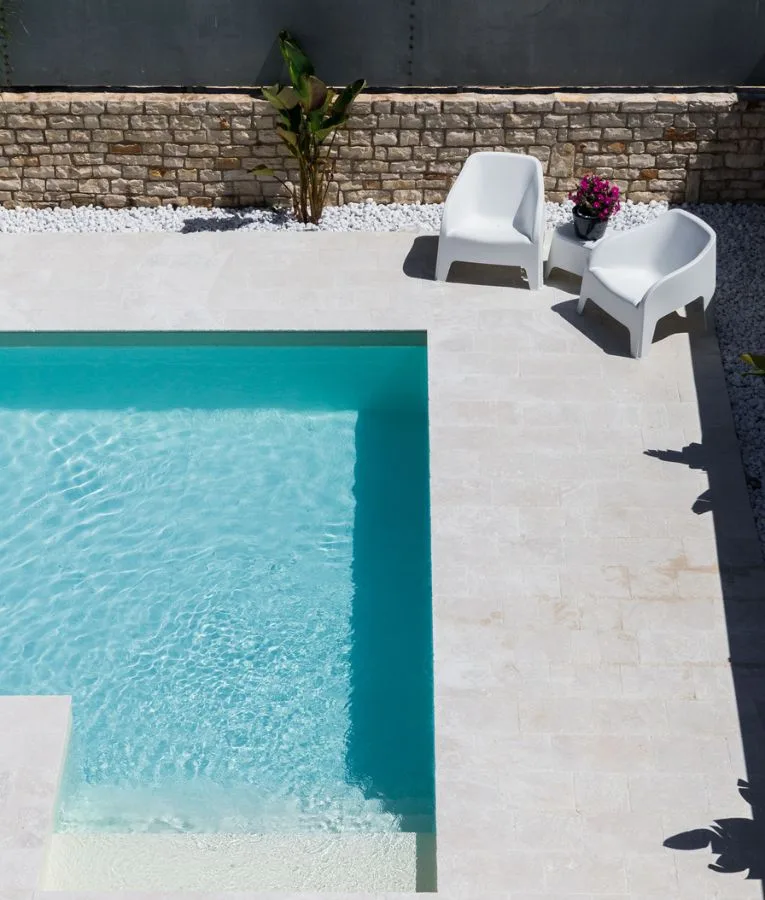
Download our catalogue HERE and discover the best solutions for you!
In the world of building and architecture, Trani marble is considered one of the most valued stones for its elegance, strength and versatility. And yet, despite its name, it is not a true marble. The confusion is widespread not only among those approaching the sector for the first time, but among professionals and stone traders too.
The use of the term "marble" for the stone quarried around Trani is the fruit of a long-established tradition, but from a geological point of view this rock is a compact sedimentary limestone, not a metamorphic marble. And yet the trade name is so deeply rooted that people still speak of Marmo Trani, di Marmi di Trani e di Marmo Biancone di Trani as though they were true marbles.
Why is Trani stone called marble?The reasons behind this confusion are several, and their roots lie in the history of quarrying and of the use of stone in architecture.
First of all, Trani stone has a look very similar to that of classic marbles. Worked with honing or polishing techniques, its surface takes on a bright and refined finish, making it indistinguishable from many true marbles. Over time this characteristic has led to a natural association between the Apulian stone and the more valued metamorphic rocks.
Another decisive element has been its use in monumental building. Since medieval times, Trani stone has been widely used to build churches, cathedrals, historic palaces and floors of value. One need only look at Trani Cathedral, a symbol of Apulian Romanesque architecture, to realise how this stone has always played a leading role in the most important buildings in the region.
Finally, the commercial side has helped keep this name alive. In the stone sector the term "marmo" is often used generically to indicate any natural stone of particular value. The established habit of calling Marmo di Trani what is in fact a limestone has allowed the Apulian stone to be recognised and sold more easily on the market.
The real characteristics of Marmo di Trani
Despite the name, Trani stone has properties different from those of a true marble. It is a compact limestone rock, formed by the accumulation of marine sediments over millions of years. This geological process gives it an even structure and good resistance to the weather, making it suitable both indoors and outdoors.
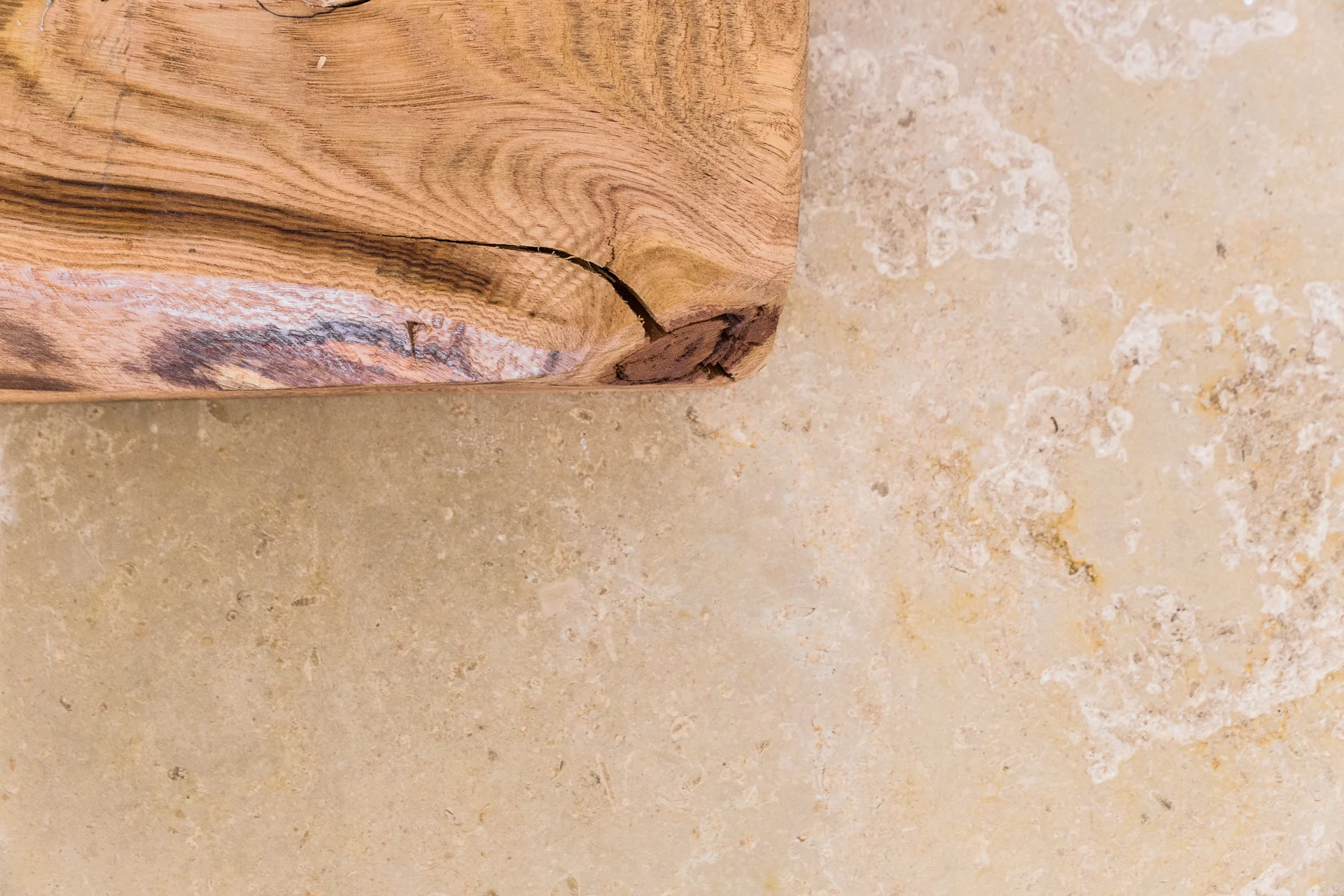
From an aesthetic point of view, pale Marmo di Trani is among the most requested variants for its soft, natural colour. The colour range runs from white to beige, with light veining or yellowish and pinkish shades. One of the most valued versions is the Marmo Biancone di Trani, particularly appreciated for its even colour and its compactness.
This stone is available in several finishes: polished, honed, bush-hammered or brushed. Polishing brings out the brightness of the surface, while bush-hammering and sandblasting give it a rough surface suited to outdoor use. Brushing leaves it smooth and matt, for interiors.
The uses of Marmo di Trani in building and design
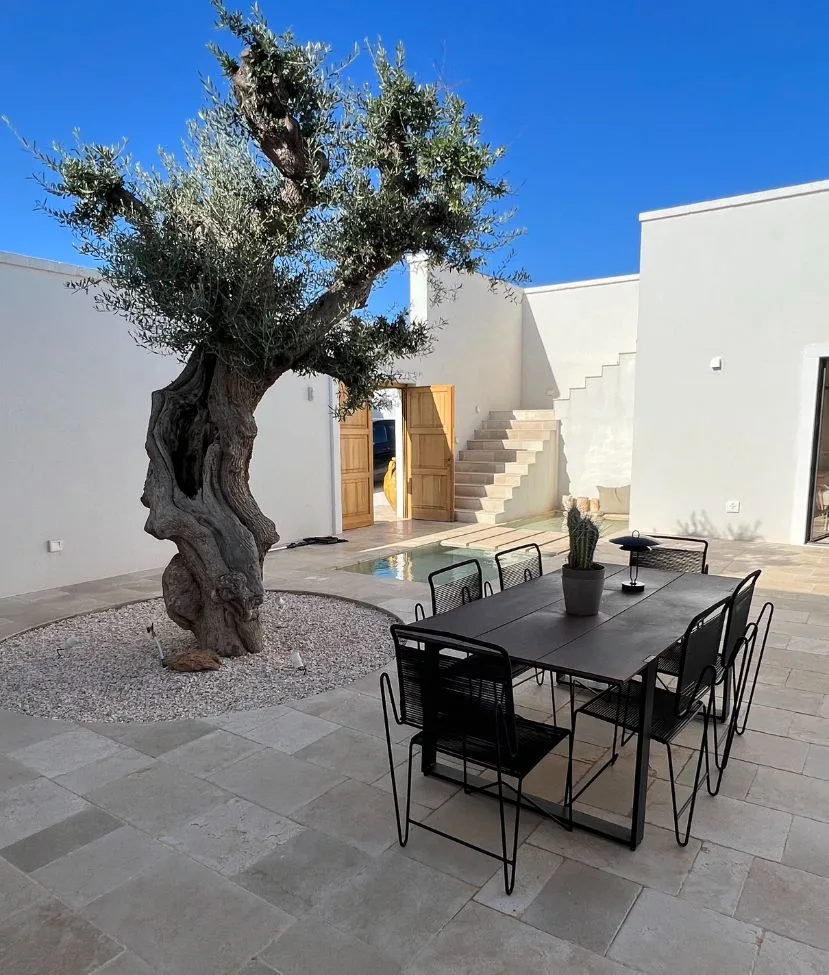
Thanks to its strength and versatility, Marmo di Trani is used in a wide range of applications. In modern architecture and in the restoration of historic buildings it is used for floors, stairs, interior and exterior claddings, street furniture and decoration.
One of its main qualities is durability. Unlike some more porous stones, Marmo di Trani stands up well to wear and to the weather, which makes it particularly suited to outdoor use. Many Italian cities use it for pavements, squares and monuments, while indoors it is valued for its discreet elegance and its ability to sit perfectly with different furnishing styles.
Download our catalogue HERE and discover the best solutions for you!
What does Marmo di Trani cost?
One of the things that makes this stone so competitive compared with more valued marbles is its price. The cost per square metre can vary according to the working and the thickness, but it generally ranges between 30 and 90 euros per square metre. Rough or less worked versions tend to cost less, while polished ones or those with particular finishes can reach higher price bands.
Compared with better known marbles such as Carrara or Botticino, Marmo di Trani is a more economical solution without giving up a refined and natural visual impact.
Marmo di Trani or true marble? What to choose
Those looking for a strong, elegant and versatile material for claddings, paving and decoration can consider Marmo di Trani an excellent alternative to true metamorphic marbles. Despite its limestone nature, its ability to be honed and polished makes it visually similar to the more valued marbles, while staying more affordable.
For those who want a natural stone with an excellent quality-to-price ratio, Marmo di Trani remains an excellent choice. Its long tradition in Italian architecture and its technical qualities still make it one of the most requested materials in the building sector.
If the name can mislead, the value of this stone remains beyond question. More than a matter of terminology, what really counts is its timeless beauty and its ability to transform any space with its natural elegance.
Get in touch now for advice! Download our catalogue HERE and discover the best solutions for you!
6 frequently asked questions about Marmo di Trani
1. Is Marmo di Trani a true marble?
No. Despite the name, Marmo di Trani is in fact a compact limestone of sedimentary origin. It is called "marble" because of its ability to be honed and polished, taking on a look similar to true metamorphic marbles.
2. What are the colours of Marmo di Trani?
Marmo di Trani has a colour range that runs from white to beige, with yellowish or pinkish shades. Among the most valued variants is the Marmo Biancone di Trani, marked by a pale and even tone.
3. Where is Marmo di Trani used?
Thanks to its strength and versatility, Marmo di Trani is used in floors, stairs, interior and exterior claddings, street furniture and monuments. It is also widely used in the restoration of historic buildings and in modern construction.
4. What does Marmo di Trani cost per square metre?
The price of Marmo di Trani varies according to the working and the thickness. On average, costs range between 30 and 90 euros per square metre, with rough versions less expensive and polished ones dearer.
5. Is Marmo di Trani suitable for outdoor use?
Yes, Marmo di Trani is very resistant to the weather and is often used in urban paving, façades and other architectural elements exposed to the elements.
6. What are the alternatives to Marmo di Trani?
If you are looking for a true marble, alternatives can be Carrara marble, il Botticino o il Travertine. If instead you want a stone similar to Marmo di Trani in look and cost, there are other varieties of compact limestone quarried in Puglia and in other Italian regions.
Keep reading

8 irresistible reasons to choose Trani stone
It is not a marble, yet it stands up to one: compact limestone, three finishes, the same stone indoors and out. Eight concrete reasons to choose it.

Trani stone: from the quarry to the finished work, the 10 stages of processing
Diamond wire in the quarry, single-blade saws in the sawmill, water jet for bespoke pieces: ten stages told one by one, from block to laying.
From theory to your site
If you are choosing stone for a project, we'll help you work out which finish really holds up.