
Trani stone: from the quarry to the finished work, the 10 stages of processing
From quarry to laying: sawing, calibration, finishing and inspection — the ten steps that take a block of Trani stone to the site.

In short
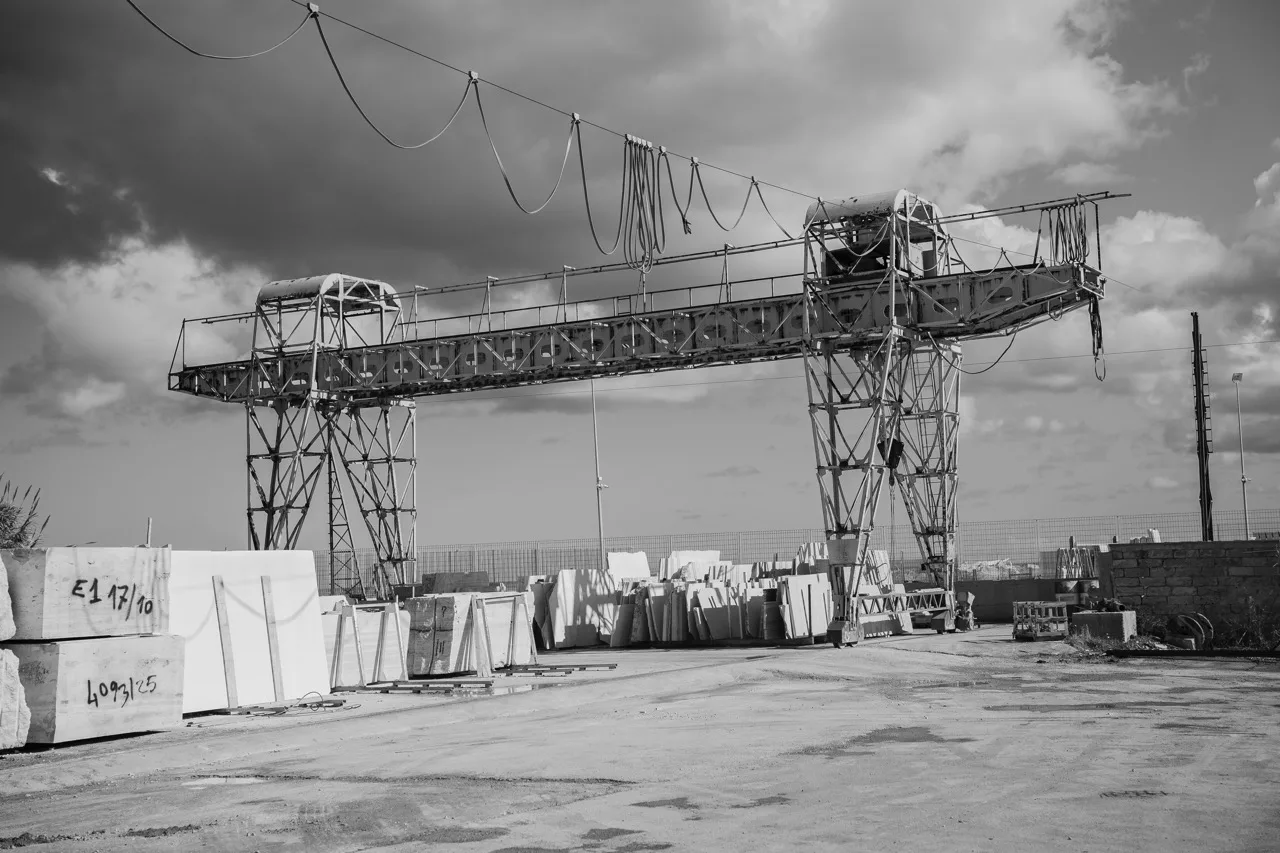
- The block is detached from the bedrock with diamond wire.
- In the sawmill it becomes a slab, with single-blade or multi-blade saws.
- Honing and calibration give an even surface and a constant thickness.
- Water jet and CNC routers for cuts to measure.
Download our catalogue HERE and discover the best solutions for you!
La Trani stone is a unique material, valued for its strength, versatility and natural beauty. Its transformation, fromestrazione to laying, is a complex process that combines technology and craftsmanship.
Here are the 10 key stages that take the rough stone from the quarries of Puglia to the most prestigious architectural projects.
1. Identifying the block in the quarry
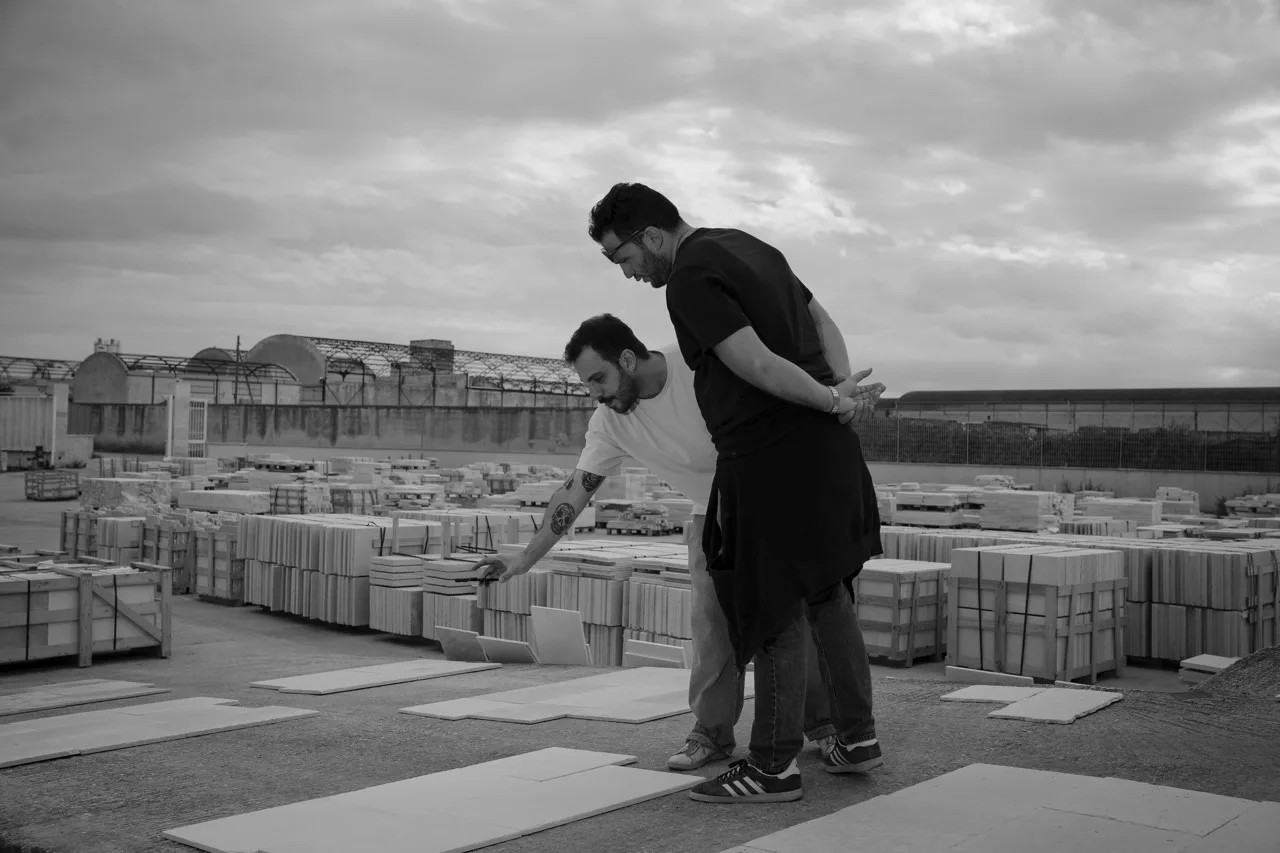
The first step is selecting the best blocks. The technicians analyse the stone to check its compactness, its colour and the absence of fractures. Only high quality blocks are chosen for cutting, guaranteeing a material free of structural defects and fit for working.
2. Primary cutting of Trani stone
Once the block has been identified, it is detached from the bedrock using diamond wire. This method allows a precise cut and reduces waste compared with traditional techniques such as explosives or pneumatic hammers. The cut is made gradually to avoid stresses and microfractures.
3. Transporting the block to the sawmill
The quarried blocks are carried on specialised lorries, secured with straps to prevent sudden movement and protected from the weather. The transport has to be careful to avoid chipping and damage that could compromise the quality of the material.
4. Sawing the blocks
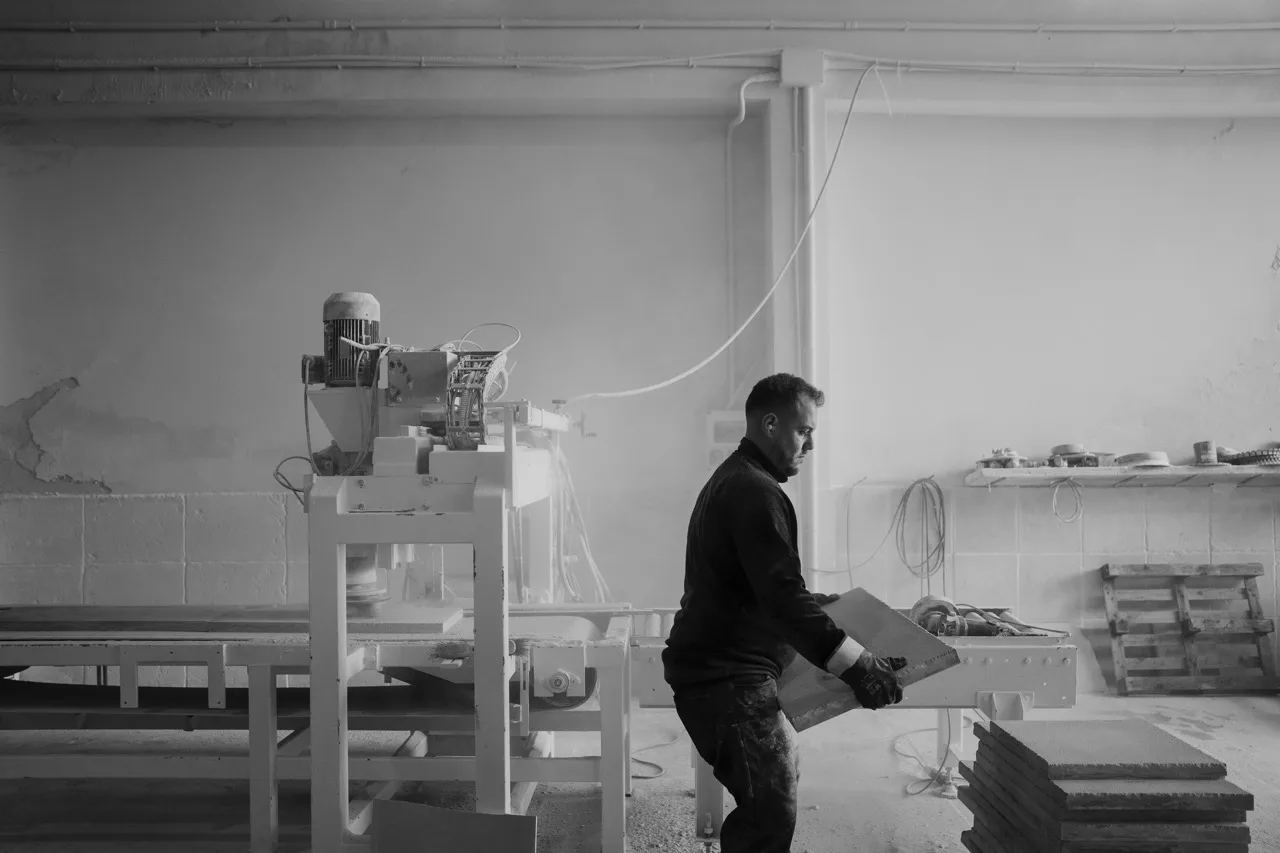
Once at the sawmill, the blocks are cut into slabs of different thicknesses according to the needs of the project. This is done with single-blade saws for cuts to measure or multi-blade saws for standardised production. The use of diamond discs ensures precision and minimises imperfections.
5. Honing and calibration
After cutting, the slabs are honed to remove roughness and obtain an even surface. Calibration, in turn, ensures that every slab has a constant thickness, making laying easier and improving the final look.
6. Surface finishing
Depending on the architectural requirements, Trani stone can be given different finishes:
- Polishing for a bright, reflective effect.
- Bush-hammering for a rough surface, ideal outdoors.
- Brushing for a more natural, lived-in look.
Each finish gives the stone a character of its own, adapting it to classic or contemporary settings.
Download our catalogue HERE and discover the best solutions for you!
7. Cutting to measure and bespoke work
To suit specific projects, the stone is shaped using advanced technology such as water jet cutting, CNC routers for decorative engraving and diamond discs for precise work. This stage is essential for bespoke applications, from paving to complex claddings.
8. Protective treatments
After laying and the first wash, a treatment that repels water and oil is applied to the clean, dry stone, above all in the kitchen and dining area. Depending on the intended use, natural impregnating agents, protective resins or non-slip treatments for outdoor paving can be applied.
9. Laying
Laying varies according to how the stone is used:
- For claddings, special adhesives or mechanical anchors are used.
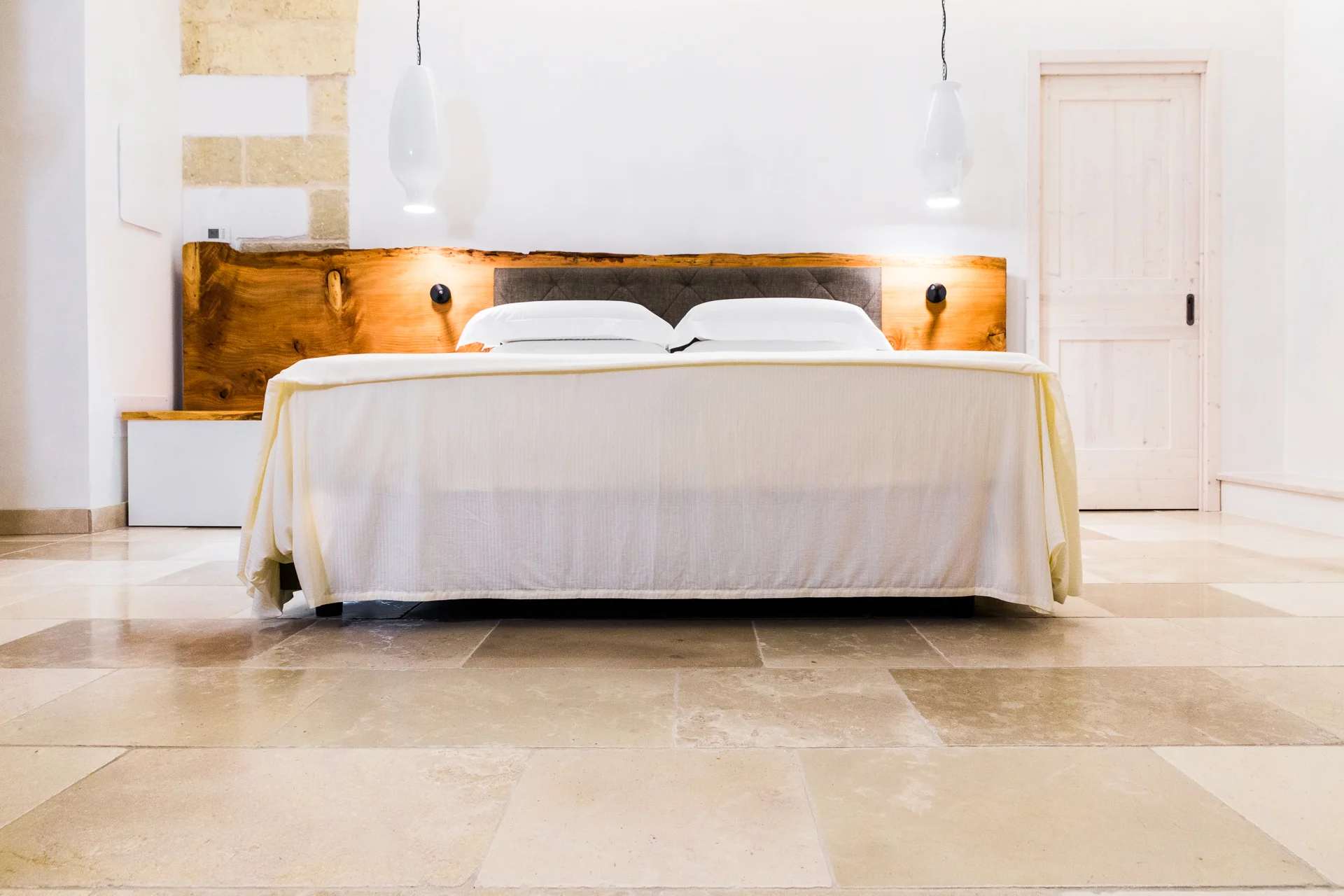
- For floors one can choose laying on a screed or dry laying for draining solutions.
- In street furniture, joints and interlocks are used to guarantee stability and durability over time.
Correct laying brings out the aesthetic and technical qualities of the stone, ensuring strength and long life.
10. Upkeep and life over time
Trani stone is known for its strength, but correct upkeep preserves its beauty and its performance over time. Regular cleaning with neutral detergents and specific treatments help keep it in perfect condition, both indoors and out.
Conclusion
From quarrying to laying, working Trani stone is a process that combines tradition and innovation. Its timeless looks and its strength make it an ideal choice for architectural projects of value. For those looking for a natural, versatile and elegant material, it is a solution without compromise.
FAQ – Frequently asked questions
How long does Trani stone last?
Treated properly, it can last for centuries without losing its charm.
Is it suitable for modern spaces?
Absolutely. With the right finishes it fits perfectly into contemporary settings too.
Does it resist frost and the weather?
Yes, it is one of the most resistant and durable natural stones available.
Does it need a lot of upkeep?
No, with the right protective treatments it is extremely simple to look after.
Can it be used for interiors and furnishing?
Yes, thanks to its versatility it can be used for floors, walls, stairs and furnishing pieces.
Download our catalogue HERE and discover the best solutions for you!
Keep reading

8 irresistible reasons to choose Trani stone
It is not a marble, yet it stands up to one: compact limestone, three finishes, the same stone indoors and out. Eight concrete reasons to choose it.

Marble floors: 10 secrets for a luxury design with Trani stone
Four finishes, three laying patterns and a pale floor that spreads the light: the choices that decide how a stone room really looks.
From theory to your site
If you are choosing stone for a project, we'll help you work out which finish really holds up.